On my flight back home, I cried through an entire bag of tissues. My time in Vilcabamba had been a dream, but I wasn’t up for the long-distance thing, not at my age, not with a guy who didn’t know if he’d ever return to the States. Part of me wanted to say the hell with it, pack my bags, and follow Dylan. Why not have a bit of adventure? But I couldn’t just drop everything and move to Ecuador—I wasn’t that kind of girl.
For two weeks, I chewed my nails down to the painful pink. What if I’d made the wrong decision? What if I’d lost him, yet again, because I was too scared to step out of my comfort zone? What if I never saw him again? I didn’t sleep much. I even let my students run around like chimps at the zoo and resorted to the time-honored teachers’ shortcut for classroom control—showing them movies.
Seventeen days after my return from Ecuador, my phone rang.
“You told me to call you if I was ever in the States,” Dylan said.
I’d been driving home from work and immediately pulled over. “You’re here?”
“I am.” I could feel the smile in his voice, almost feel his breath against my cheek.
“You didn’t come back for me, did you?” I asked as innocently as I could.
“No, but I came back because of you.”
His response fell short of the yes I’d been hoping for. “Isn’t that kind of the same thing?”
“No. During your visit, I realized I’d been away for too long. I’m not keeping my finger on the pulse of the market. I’ve got an itch in the back of my mind telling me I should sell one or more of my properties while the real estate market’s high. I booked meetings with Phil and a few other guys to figure out my next steps.”
How could someone who was so damned strategic be so clueless about what to say to a woman? “Couldn’t you have done all that over the phone?”
“I could. But you get a feel for a place when you’re in it. Besides, I’ve never actually sold before. There will be all kinds of tax questions I’ll need to answer. I need to network to find the right advisor.”
Why must he sound so dry and calculating? Underneath all that logic, was he as heartbroken as I was? It’s not like I was waxing poetic, either. The least I could do was help Dylan, even if only as a friend. “I think I have just the right guy for you.”
“Let me see if I get your gist.” Other than breaking in to order dinner, Vinny had sat silently listening to Dylan’s story for an entire fifteen minutes, probably a personal record. “Your property values have gone through the roof, but since rental values are as stuck as a constipated mule, you’re getting a piss poor return on your money. Is that right?”
I giggled, but Dylan kept a straight face. “Yes.”
Vinny’s wine arrived, and he swished it around his glass as he spoke. “You could use your equity to buy more properties, but at current purchase prices, they wouldn’t cash flow, so they’d be sinkholes.”
“Right.”
Vinny sipped his wine and nodded in approval. “You could stay the course since your passive income’s only gone up, but you want your money moving at a sprint, not a limp.”
“Right, and because I accelerated the depreciation on my properties, I’ve used up much of my tax benefits. That was fine as long as I was adding properties, but pretty soon, I’m going to get hit with taxes.”
Vinny’s eyebrows went up. If there was anything he was sensitive about, it was taxes. “What are you thinking?”
Dylan fidgeted with his napkin. “Well, I could sell some properties…”
“But your portfolio has gone through the roof, so if you’re not stuffing your cash into new properties, you’ll get walloped on capital gains. To boot, you’ll be stuck with a giant hunk of cash you don’t know what to do with.” Vinny leaned back in his chair and shook his head. “Sitting cash is just a recipe for trouble.”
“How come?” I asked.
“Cause it’s hanging around the corner like a red-light whore, and as easy to pick up and spend.”
Dylan blushed. He ignored Vinny’s comments and continued with his concerns. “If I had a decent enough place to invest, I could just refinance and get the appreciation of the properties in hand…”
Vinny tapped the table. “And you wouldn’t owe any taxes on them since you don’t pay tax on borrowed money. The problem is that you’ll start owing interest on that cash, and right now, interest rates are higher than your rates of return, so what’s the point? Plus, if the market does go down, you’ll be in danger of having your properties underwater and taken by the bank.”
“Right.” Dylan nodded at me. The fact that Vinny picked up everything so fast showed him my recommendation was spot on.
Vinny took another sip of wine. “So, what can I do for you?”
“Am I right to be nervous about the real estate market?”
“Absolutely. Growth has been nuts. You see it in every boom; banks give away money without a care. Why bother doing credit checks when everyone’s rakin’ it in? So what happens? Simple supply and demand. The pool of buyers gets bigger, so the prices go through the roof. Eventually, prices get too high for deadbeats to make mortgage payments. Banks get more cautious. Now they’re rejecting even guys with decent jobs. The pool of buyers gets smaller. Plus, everyone was building like crazy during the boom, so there’s more housing stock to go around amongst fewer buyers. Prices crash.”
I broke into the conversation. “That’s what you think is going to happen?”
“Guaranteed it’s going to happen. The question is, when? Timing these things is always the trick.”
A hot loaf of bread arrived on a cutting board. I cut each of us a slice, then topped mine with herb butter. The crust was flakey, the inside warm and chewy, and the butter melted over all of it. “When do you think the downturn’s going to happen?”
“It’s already beginning. Interest rates are creeping up, which is an early warning sign. My bankers are telling me they’re rejecting more and more applicants.”
“Are you selling?” Dylan asked.
“Me? No way. I rarely sell.”
“Why not?” I asked.
“I make my money when I buy. That’s the beauty of the buy and hold strategy. Cash flowing properties make money in good economies and bad. As long as rental prices stay up, I don’t worry about the sticker price. Not to mention that I’d get taxed to hell and back, both on my profits and on repaying all the depreciation I’ve deducted over the years.”
I swallowed my bread. “I thought you avoid taxes if you reinvest the profits?”
“You can with a 1031 exchange. But to do that, I have to find another, more expensive property to put my money in. But that property is likely going to be just as inflated, and there’s a huge transactional cost to buying and selling.”
“The problem is,” Dylan said, “I depend on the equity in my properties to make future investments. If prices go down, I’ll lose my equity and my leverage along with it.”
“You’re skittish about losing money. I hear that. Just remember, markets bounce back.”
“So you think I should just hang on to what I have?” Dylan asked.
I expected Vinny to give a quick ‘yes,’ but he didn’t. “Tell me more about your properties. Do you have any that you’ve lived in for two out of the last five years?”
“Yeah, the last quadruplex I lived in.”
“If you insist on selling something, that’s the one.”
Dylan nodded, but I was confused. “Why does that matter?”
“Up to $250,000 profit on that place is tax-free.”
“$250,000?”
“And that’s only because he’s single. Had he been married, he could have taken up to $500,000.”
I felt an immediate stab of guilt. Had I stood by his side a couple of years ago rather than freaking out and dumping him, we could have taken advantage of the full tax savings. But of course, he wasn’t the only one who could use that tax law to his benefit. “I’ve owned my duplex for over two years. Should I sell too?”
“Look, Dylan’s got a bunch of properties, and he’s paranoid that the market is going to crash. If he’s looking to hedge his bets, it makes sense to sell the one that’s tax-protected. You’re in a different situation. All you’ve got is the duplex, and it’s also your home.”
I knew how much having a home meant to Vinny, especially after losing his as a kid. “But if the market’s going down…”
“That’s a big if.” Vinny cut himself another slice. “Dylan thinks it will. I’m inclined to agree. But no one ever knows these things for sure.”
Dylan jumped back in. “My quadruplex has gone up a hell of a lot more than $250,000.”
“Count yourself lucky.”
“What do I do with all the money?”
Vinny pretended to rub his eyes. “It’s quite the sob story: too much money and no clue what to do with it.”
“I know, I’m hardly deserving of pity.”
Vinny waved that away. “I’ve never bought that crap that big money problems are less important than small money ones. The fact is, those with money contribute a hell of a lot more to the world than those without, so there’s no reason they shouldn’t stress over it.”
Dylan ripped little pieces of bread, making crumbs land on his plate like confetti. “So what do I do?”
“First off, your timing’s good.”
“How’s that?”
“It’s January. You’ve got over a year to figure out what to do with your profits before you’ll pay any taxes.”
“I hear that.”
“Next, the fact that you’re in Ecuador opens up some opportunity. Do you make any active income in the US?”
“A bit. I’ve been coaching people online.”
“And you pay US income tax on that?”
“I’ll have to start soon. So far, depreciation has knocked out my active income, but when my depreciation plummets, I’ll lose that ability.”
“I thought depreciation only applies against passive income?” I asked.
“If your active income is low enough, and mine is super low,” Dylan pointed at the ground, “then deprecation can even offset active income.”
Vinny picked up his questioning. “How long are you planning on living in Ecuador?”
Dylan shot me a look. “I’m not sure. Why is that important?”
“The foreign earned income exclusion.”
“What’s that?” I asked.
“In most countries, when you stop living there, you stop paying their taxes. But Uncle Sam demands his protection money regardless of where you live. But remember what I told you about our lovely tax code?”
He’d told me dozens of things about our tax code, but I had a hunch where he was going with this. “If you use it right, it’s a roadmap for how to make money and keep it.”
“Bingo. In this case, if you live out of the country and earn your income out of the country, you get to exclude over $100,000 a year of that foreign income from US taxes.” Our garden salads arrived, and Vinny dug right in.
“But even if Dylan can somehow transfer his income to Ecuador,” I asked, “won’t he just pay taxes there instead?”
“Very good, Amber. Which is why Dylan will do best if he can earn his money outside of the US and Ecuador. I take it Ecuador won’t tax your worldwide earnings, will they, Dylan?”
“No. Just what I earn in Ecuador, and even there the first $9000 or so is tax-free. But there’s only so many hours I want to spend coaching, so I’m thinking of creating an online course. If I’m selling that in the US, the foreign earned income exclusion won’t help, will it?”
“Like anything else, it depends on how you structure it.” Vinny jabbed at a tomato and popped it into his mouth. “I’ve got a buddy who can set you up with a corporation out of Belize.”
“How will that help?” I asked.
“Easy peasy. The client pays the corporation for the course, the corporation pays Dylan a salary. Bingo, Dylan’s income comes from Belize, which last I checked wasn’t in either the US or Ecuador. Bye, bye taxes.”
My eyes narrowed. Vinny told me everything he did was above board, but this sounded shady. “So the client has to send the money off to Belize? Won’t that make some of them suspicious?”
“Absolutely not. The Belize corporation sets up an LLC here in the States.”
“What’s that?”
“A Limited Liability Company. Basically, a US company.”
I crossed my arms. “So you’re going to create an offshore company, then have it own a US company?”
“Exactly. That way, the LLC banks in the US no problem, and clients pay the US company. Any work Dylan does on his course will be as an employee of the Belize company. He’ll draw his money from there.”
“And this only works if he lives outside the US?”
“Exactly. He needs to be out of the country for at least eleven months a year.”
I jabbed at my salad. “I’m not a big fan of this plan.”
“Look, it’s not the only way to go. But if he’s already beaching in Ecuador, might as well protect him from the IRS’s grubby fingers. And if he sells US properties, he could reinvest overseas.”
I chewed on the last of my salad as I processed this. How did the oh-so-great real estate market suddenly become a trap? “Is foreign real estate investment an option? It seems a lot less profitable without the crazy depreciation laws we have in the US.”
Vinny waved that off. “You and I might think the US policies are nuts, but that doesn’t mean the rest of the world’s governments agree. In my experience, they all operate on one guiding principle.”
“What’s that?” Dylan asked.
“Monkey say, Monkey do. Most loopholes in the US exist everywhere else too. Will it be exactly the same? Nah, instead of depreciating a house in 27.5 years, some will depreciate it in 25 and others in 30. Don’t write off investing internationally, but plan on doing your research first.”
Part of me had been hoping I’d catch Vinny, that he’d realize that foreign investment wasn’t such a good idea. What was I thinking, that he’d admit his mistake and advise Dylan to stay here with me? I’d have to suck all this up like a big girl and face reality. “Are you still buying real estate, Vinny?”
“Not with the market this high. Cash flowing properties are a thing of the past.”
“So what are you doing with your money?”
“Oil exploration.”
“Oil?” I couldn’t help but laugh. “Seriously?”
“Oil gets mad subsidies. Over 70% of the cost of a well depreciates in the first year. And unlike real estate, this depreciation offsets unlimited active income.” Vinny wiped his mouth with his napkin. “Then there’s depletion.”
“Depletion?” I asked.
Vinny pointed to Dylan’s untouched plate. “If Dylan continues to ignore his salad, what’s going to happen to it?”
“The waitress will clear it away.”
“What if there is no waitress. What if it sits here till Tuesday?”
“It will go rotten.”
“Exactly. The lettuce will be inedible by morning. The tomatoes and cucumbers will take a little longer, but they’ll go too. Eventually, even the croutons will be disgusting. That’s depreciation. Dylan’s got a ten-dollar salad that will deteriorate until it’s worth nothing. Ah, but could that ever happen with my salad?”
“No way. You eat it too fast.”
“Exactly. Each bite I take depletes what is left until it’s all gone.”
“The tax code treats depletion like depreciation?”
“It can be even better. If I buy $100,000 of real estate, by the time I’ve depreciated $100,000, it’s gone. Bye, bye depreciation.”
“You get even less because the land doesn’t depreciate,” I said.
Vinny shot me a wink. “You’ve been paying attention. But depletion is different. I get to deduct 15% of my gross profit every year. So if I take out $10,000 in oil, I can deduct $1500. And I can keep doing this till I’m worm food. If I’m still pumping black gold out of that hole 100 years from now, I’ll still get my 15% depletion credit every single year until the oil runs out.”
“Do you have to choose which tax benefit you want?” I asked. “Depreciation or depletion?”
“Oh no, you get them both.”
“That would never happen with Dylan’s salad.”
“Very true. Isn’t the tax code great? I’m telling you: Disney couldn’t create a better fairy tale.”
Technically, Disney got his fairy tales from Grimm, but I wasn’t about to correct Vinny. Besides, our dishes finally arrived. Vinny, of course, had gotten his veal scaloppini, but I couldn’t bank on him covering the tab this time, so I got the chicken. Dylan still hadn’t touched his salad and told the waiter to hold off on his dish. After a bite of chicken, I asked, “You’re diverting your real estate profits into oil to keep them from getting taxed?”
“Anything to keep them slimeballs from getting it.” Vinny made a gesture I’d rather not describe.
Dylan finally managed a bite of his salad. “What do you think about my situation?”
“You want my honest two cents?” Vinny cut into his veal and chewed a few bites before continuing. “You know what your problem is? You’ve gotten lazy.”
Dylan’s hand curled around the napkin on his lap. “You think I ought to still be working full time?”
“I don’t mean physically lazy. You think I care if you lounge in your hammock sipping piña coladas all day? The fact is, you got intellectually lazy. You’re a one-trick pony. Your strategy was to spend nothing and put your cash into rental real estate. As strategies go, it was a good one. For a while. But now you’re priced out of the market, and you desperately need a strategy update.”
The muscles around Dylan’s jaw clenched. “You think I should have been diversifying all this time?”
“Nah. Diversification is a highway to mediocrity. Virtually everyone who’s ever made it big had one focus. Still, when your one thing stops working, you’re stuck.”
Dylan slumped in his chair. Vinny had him pegged, and it hurt. “What should I be doing?”
“Step one, stop thinking of yourself as one of those beggars on Staton Ave.”
“Look, Vinny, I barely have enough income to squeak by in the US these days.”
“Someone did a great job drilling into your head that the number one thing is passive income. Good. But just because it’s number one, don’t think it’s the only thing. Fact is, while you’ve been sipping margaritas…”
“I thought they were piña coladas?” I said, trying to lighten the mood.
“Whatever. Without Dylan doing a damn thing, he’s become a millionaire, which means he’s accredited.”
“What does that mean?” I asked.
“You ever heard of a company doing an IPO?” Vinny asked me. “You know what that stands for?”
“Initial…” My shoulder inched towards my ear. “Public Offering?”
“Bingo. You ever stop to think what those words mean?”
I bit my lip. “It means they can start selling stock to the public.”
“How’d they raise money before?” Vinny asked me.
“Privately, I guess.”
“Which means a private company can have shareholders, right?”
I thought back to Anthony’s early investments in companies. “Yeah.”
Vinny’s questions just kept coming. “So why couldn’t this company sell the shares to the general public before their IPO?”
“Because they weren’t listed on an exchange?”
“Nah, that’s just circular reasoning. Let me put it this way. Think of an IPO as a GSO. A General Shmuck Offering. Once it goes public, any shmuck is allowed to buy shares. Before it goes public, only select people are allowed to invest. These privileged few are accredited investors.”
“Why limit it?”
“Our lovely government is afraid big bad companies will pull the wool over the eyes of us helpless lambs.” Vinny held his hands over his eyes. “So they make companies go through a million hurdles before they can IPO.”
“I think I get it. If investors are savvy enough, the government’s not afraid they’ll get ripped off, so they let them buy shares before the IPO?”
“In theory. In practice, it’s a load of crap.” He cut into his veal.
“Why?”
“Because you know how you demonstrate your investing expertise to the government?”
“By taking an exam?”
Vinny slapped the table. “Yeah, right. Like a driver’s test? I’m afraid that’s a bit too logical for the dunces on Capitol Hill.”
“How do they decide?”
“It’s all based on how much money you have. If you’ve made $200,000 or more two years in a row, you’re basically accredited. Married couples are good at $300,000.”
“But Dylan doesn’t make that much.” I turned to Dylan, who was finally finishing the last of his salad. “Do you?”
“He doesn’t need to,” Vinny said. “He fits the other test.”
“Which is?”
“If I got my math right, your net worth, ignoring your primary residence, is over $1,000,000. Am I right?”
Dylan nodded. Something about Vinny’s chatter had finally gotten him hopeful. He waved over a waiter to bring him his chicken parmesan.
“Why don’t they count your primary residence?” I asked.
“You’re looking for logic from those crackpots in Washington?”
“Oh come on, they’re not that bad. They must have a reason.”
Dylan broke in. “It makes sense. First of all, a primary residence isn’t normally income-producing, so it’s not money that’s working for you. Secondly, if you get into financial trouble, they want you to have enough cushion to get out of it without having to sell your house.”
Vinny shrugged this off, like he did with any comment crediting the government with half a brain. “In any event, Dylan is terrified about losing money, which is why he’s frozen like a popsicle in the Arctic.” He nodded toward Dylan. “I don’t believe you’ll go into oil or any one of a hundred other investments you don’t know a damned thing about because you don’t want to risk losing your precious money.”
Was Vinny trying to break Dylan? If so, it wasn’t working. Dylan sat up, suddenly defensive. “Is that such a bad thing?”
“Nah. Like Warren Buffet says, the first rule of investing is don’t lose money. But you also don’t want your money sitting in some bank earning loose change.”
“What about index funds?” I asked.
“The stock market has shot straight up along with real estate. Odds are, they’ll tumble together like Jack and Jill.”
“So what are you recommending?”
“Here’s the thing. When Dylan was poor, he had to figure it all out on his own. The big shots in finance wouldn’t talk to him. They couldn’t, according to law, because he wasn’t accredited.” Vinny relished his last scallop with a groan that belonged more in a bedroom than a restaurant. He leaned across the table with a sly grin. “Now, Dylan, it’s a whole new ball game. You’re worth over a million, so you can start swimming in a bigger pond. You’ll still be a small fish, but you can finally start investing with the killer whales.”
“And that’s a good thing?” I asked.
“Mostly. It’s not without its perils. It also means you’ll be swimming with bigger sharks.”
“Meaning what?”
“They’ll come at you with slicker sales pitches. It can be harder to tell the genuine investments from the shysters who smell blood in the water. But it also opens a world of opportunity.”
Dylan asked, “How do I tell the good deals from the bad?”
“It sounds like when you first started, you learned everything you could. You did well. But the game’s changed, and your financial position’s changed. If you’re going to start selling properties, you gotta get back into the school of life.”
The next day, Dylan drove over to my place, where I was cleaning like mad. If I was going to put my duplex on the market, I wanted it to shine.
Dylan asked for a tour of the house. “You did all the design work here yourself? It’s so cute.”
“Beats covering the entire place in off-white paint, doesn’t it?”
“For living in, definitely.” His head did that I’m-not-sure-about-that shimmy. “But for practical upkeep—.”
“Yeah, yeah, I know. But there’s more to an apartment than practicality. Come on.”
I led Dylan into the garage, which I’d converted into a short-term rental. “You have no idea. Adding a few flairs has done wonders for attracting tenants.”
“Who do you rent it out to?”
“Mostly corporate types here for conventions. Right now, I’m getting the ones who want to be in a quaint part of town close to restaurants and cafes. But once the light rail is done, it’ll only be three stops from the convention center. That was my main motivation for fixing it up.” I sat on the plush sofa and leaned against one of the African pillows that brightened up the space. “I’m going to miss this place.”
Dylan nestled next to me. I should have pushed him away—he was only in town for a visit. But his warmth felt so good, I couldn’t help but fall into him. “You don’t need to sell it, you know.”
“Yes, I do.”
“Why?”
“Dylan, when we first started dating, I was over $10,000 in debt. Through implementing the strategies you taught me, I got myself completely out of debt and started building up some assets. You know what I now have?”
“How much?”
“About $8,000 in the bank plus a little more in my ROTH IRA plus my 401(k) from work.”
“It sounds like you’re doing pretty good, considering where you started.”
“True. But if I can make $250,000 tax-free right now…,” I wrote the number on my pad and circled it. “I’ll make more than 30 times my current savings in one shot. I can’t pass up on that opportunity.”
“The money is still yours; it’s just in the house now.”
“Right, and if the market tanks tomorrow, all that equity will just disappear.”
Dylan rubbed my shoulders. “Why is it so much easier for you to let go? You love this place; it’s written all over your face. My properties are just investments, yet I’m struggling to part with them.”
“Trust me, I hate letting go.”
“Then how can you do it so easily?”
“It’s not easy. But…” My head fell. “Did I ever tell you what happened to my father?”
“You mentioned a heart attack.”
“Right, that was two years ago. He got it from working crazy hours under intense pressure.”
“I’m so sorry to hear that, Amber.” He ran his fingers along the base of my neck.
“I haven’t gotten to the bad part yet. He was barely out of the hospital before he was right back to work. I wondered why he didn’t retire, take it easy.”
“Amber, there are people who just wouldn’t know what to do with themselves if they weren’t working.”
“That’s not the answer I got.” My face grew hot with the memory. “He couldn’t afford retirement. But with another $250,000…”
“You’re going to give all that money to your parents?”
“You know why my parents can’t afford retirement?” Guilt cut into my chest. “Because of me and my siblings. Paying for our braces, paying for college.”
Dylan lifted my face to meet his. “I met your dad. There’s no way he’s going to accept a penny of that money.”
I shrugged. “Even so, I have to try.”
“I admire your resolve. Next to you, I feel like a wimp.” Dylan’s head shook slowly as he spoke. “I so hate risk. I figured out a way to put my money in a place where it will be working for me rather than me working for it. Now I need to find a new place to put it or suffer losses. The uncertainty is killing me.”
“You’ll figure it out. I know you will.” I rested my hands on his face and held it still. “You’ve got a lot more knowledge in this head than you give yourself credit for.”
“I suppose you’re right. The truth is, I’m not entirely clueless. I’ve read plenty of books and listened to podcasts in areas other than real estate. Nothing Vinny said last night about being an accredited investor was new to me. I just lack first-hand experience.”
“Yeah?” My eyebrows shot up. “You understood what Vinny meant by the killer whales?”
“Sure, there’s no big secret there. He meant hedge funds, venture capital, private equity. Funds that are only open to accredited investors.”
“You’d consider going into venture capital?” The idea that Dylan could wind up investing in Anthony’s firm felt wrong on so many levels.
“Right now, I’m just trying to understand my options.”
“Would you make more in those funds?”
“Not more than I made when I house hacked. Not a chance. But I’ll make more than I’m getting now. My current returns, relative to the value of my properties, are pathetic. And there are other advantages.”
“Like what?”
“Like it’s no longer my headache.” Dylan rubbed my temples. “Have you ever heard of a professional tenant?” I shook my head. “I had one of those my second year in real estate. Total nightmare.”
“What is it?”
“A professional tenant is someone who isn’t paying rent, but also refuses to leave. It can take months and cost a fortune getting them out.”
“Don’t they have to pay you back?”
“Legally, yes. But they’re usually broke, so good luck getting anything out of them. I had a period of three months when I still had to cover all the costs of that apartment, without any rent to cover them. Then I had to pay a lawyer to get an eviction order and have the sheriff throw them out.”
I was missing something. Again. “What does this have to do with being accredited?”
Dylan took the notebook and pen out of my hand. “Let’s say I wanted to invest in real estate through a private equity fund.” Dylan drew a little house complete with chimney and smoke. “Instead of buying a place with a couple of rental apartments, I might own a small share of a 400-unit apartment complex.” Now he drew an enormous high rise. “What would happen then if a professional tenant moved in?” In between his house and high rise, he drew a hobo stick man.
“Wouldn’t it be the same process of getting him out?”
“Identical. The same lawyers, sheriffs, unpaid rent. Except this time, I’d never hear about it. The unpaid rent from that one apartment would be balanced out by the other 399. Getting rid of the tenant would be someone else’s problem. At worst, it would be a footnote in my quarterly report explaining why distributions went down by $100.”
“What about when Vinny said diversification is a highway to mediocrity?”
“Mediocrity is not always a bad thing. When I started, I grew my net worth by 50-100% per year, but I also busted my butt, took all the risk, and lived like a pauper. These funds are more likely to return 8-12%.”
“And the risk?”
“Like Vinny said, there are bigger sharks in the water. Still, if you diversify across industries and across funds to protect yourself against the unexpected, the risk is pretty low.”
“This is where professional investors put their money?”
“No. Professional investors run these funds, and their returns are far higher. They raise money from wealthy people who don’t want to be bothered learning the ins and outs of every investment, who want no hassles, no headaches, and steady, predictable returns.”
“No hassles, no headaches, and steady, predictable returns.” I sank into the couch. “Sounds like the perfect recipe for a guy who wants to lie in his hammock sipping margaritas.”
“I prefer piña coladas.”
“You know, I’m surprised at you.” I took his hand in mine. “One of the things you kept emphasizing when teaching me this stuff was that you could figure out whatever you needed to know. The information is out there; we just have to sift through it.”
“You’re right. Count me in.” Dylan rose to his feet. “But even before then, I should put The Crypt on the market. On that house, I won’t take such a huge hit on the taxes.”
“And I’ll put this place up. Should I call Phil and ask him to list them both?”
While Dylan looked up real estate listings online to get a sense of the market, I called Phil. When I told him why I was calling, he just said, “You too, eh?”
Uh oh. “Are a lot of people trying to sell?”
“The inventory is going through the roof. Especially since all these new buildings are finally getting their certificates of occupancy.”
“Are we too late?”
“Not at all. Prices keep rising, despite the additional inventory. Just know that houses aren’t moving as fast as they were a few years ago.”
My chest clenched. “How fast were they moving?”
“If a house was well priced, I’d get multiple offers the day it opened. Everyone was afraid they’d miss out if they didn’t jump.”
“And now?”
“The pool of buyers is smaller, as fewer people can afford the current housing prices, and those who can afford it are growing wary of a market correction. But so far, the drop in interest has only slowed the growth, it hasn’t reversed the market. I still think we can sell your place within a couple of weeks as long as the market doesn’t plummet before then.”
“And if the market reverses?”
“While the market is skyrocketing, buyers get paranoid of being left behind, and they trip over each other to put in offers. When things shift, the opposite happens. Buyers get afraid of overpaying and are more likely to wait for it to bottom out.”
“You think we have some time before that happens?”
“No idea. All the warning signs are flashing. But there’ve been plenty of false alarms before when the market continued its upward trajectory.”
I took a cue from Susanna and made over three pounds of cookie dough for the open house. I added extra vanilla so the scent would spread. I placed freshly cut flowers everywhere. Phil suggested I not be home when the buyers arrived, but I couldn’t bear to leave. So I took a book and sat on the loveseat to highlight the coziness, and I baked batch after batch of cookies.
Of course, I couldn’t read a word of my book and was relieved whenever anyone wanted to ask me questions. About anything. But mostly just agents saw it the first day, and they directed their questions to Phil.
The new light rail stop would be operational within three months, so the neighborhood was hot, just as Phil predicted it would be. The first offer came in three days after the listing was put up, and it was a low ball. I was debating countering, but Phil told me to hang tough.
The next weekend brought a flurry of activity. Agents who had come on their own were back with clients. Cookies came out of the oven at thirty-minute intervals. It was a good thing I’d made so much dough in advance, as there was no way I was going to dirty my spotless kitchen during the showings.
At the end of the weekend, we had three new offers. By the time Phil finished negotiating, the highest bid came in $280,000 over my purchase price.
“So all that except for $30,000 will be tax-free?”
“You won’t pay income or capital gains tax on any of it,” Phil said. “After you deduct improvements made to the house and my commission, you’ll be just below $250,000 in gains.”
So I did it! Even after paying Phil’s commission, I’d have almost exactly $250,000 to do whatever I wanted with. I knew where I wanted it to go. The question was, would it be accepted?
“I’ve got news,” I said to my parents over Sunday dinner at their house.
“Oh?” My father’s eyebrows shot up.
I bounced in my seat the way I did when I’d come home with a 100 on a test. “I sold my duplex.”
“Really?” My mother stopped grating parmesan over her fettuccine. “But you loved that place.”
“I did, but it was time to move on.” I served myself another beefsteak tomato with mozzarella.
“Where will you live?” she asked.
“I’ll have to find an apartment.” I shrugged as if it was no big deal, but the reality was that I had no clue where to go. I hated the idea of leaving my home.
My mother’s head tilted further in confusion. “But why?”
“I was able to get out $250,000, tax-free.”
“That’s wonderful, Amber,” my father said. “At your age, that will set up a great nest egg.”
I shook my head. “I want you to have it.”
My parents looked at each other. “Amber, we appreciate that,” my mother said, “but we can’t take your money.”
“It’s not mine. It’s yours. I’m paying you back for the money you put into my education.”
“Amber, that money was a gift.” My mother laid her hand over mine. “You pay it back by giving to your own kids. We don’t want it.”
“Amber,” my father said, “does this have anything to do with my heart attack?”
I nodded, and tears flowed down my cheeks. “I know you didn’t have enough to retire on. I thought, if I could help…”
“That I’d retire on your money? And what would I do with myself all day?”
“I don’t know.” My voice sounded so young, so scared, like when I’d cry over not getting invited to a sleepover in middle school. Why did visiting my parents always do that to me? “Golf?”
“I enjoy my work. I enjoy interacting with my colleagues and clients. I appreciate the thought, but even if I had more money, I wouldn’t leave.”
“But, your health…”
Dad kissed my forehead. He looked right into my eyes and said, “My health is doing much better. I’m going to the gym twice a week. I’ve cut back on desserts.”
Recognizing that I wasn’t going to win this one, I changed tactics. “What about your house?”
“What about it?”
“You’re living alone in a five-bedroom. The market is high right now. If you sold, the first $500,000 in profits on the house would be yours tax-free. You could downgrade to a one or two-bedroom and put that extra money into your retirement. That way, when the time comes, you’ll be prepared.”
What I was thinking, but didn’t say, was when the next heart attack hits, he wouldn’t be forced back to work.
“It’s funny you mention that,” my mother said. “We’ve been discussing downsizing for years, maybe moving downtown where your father will be closer to work, and we can enjoy the city life. But we were afraid you kids would miss having the house you grew up in.”
I studied the flowered wallpaper in the dining room. I would miss this house. I had so many memories here. But I was more concerned with the memories I wanted to create in the future, memories of my kids bouncing on their grandfather’s knees. I wanted my kids to have him in their lives for a long time to come. I’d talk to my siblings and make sure they’d be supportive. I flashed them my biggest grin and kissed my father’s cheek. “Sell it. It’s a good time for it. Moving downtown sounds like a great idea.”
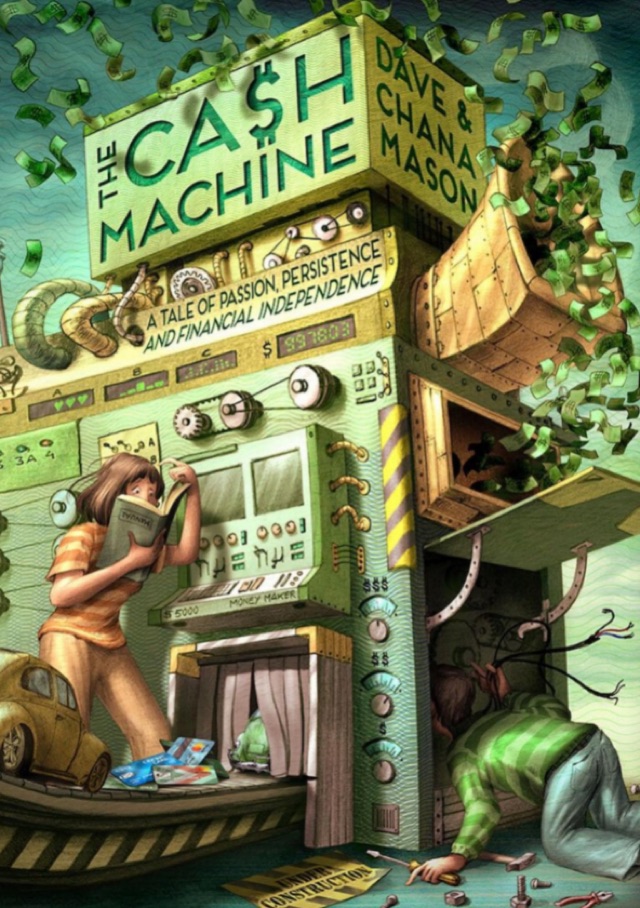
In the end, Dylan’s fear of loss won out over Vinny’s advice to hang on for the long term. He decided to hedge his bets and sold three of his six properties, allowing him to clear $1,050,000 in post-tax profit. It was a windfall, yes, but at the same time caused him stress. Money only contributed to his Cash Machine when it generated passive income, and he wasn’t sure what to do with it now.
It’s not that he couldn’t find cash flowing investment opportunities. The very opposite was true. There were thousands of new investment opportunities open to him now that he was an accredited investor. The question was, how to best choose between them? And most of these funds required him to commit his money for five to seven years, which he wasn’t comfortable doing.
Short term, he dropped his cash into a money market account, where it earned him a bit of interest, yet was liquid enough he could access it any time he wanted. But it wouldn’t generate enough passive income for the life he wanted in the US, so he planned to return to Ecuador.
The problem with Dylan and myself was that one of us was a wimp, totally afraid to take life by the horns. But which one of us? Was it Dylan, because he chose Ecuador for its low cost of living and his income tax exemption? Or was it me, because I was afraid to leave home and dive into a life of adventure with him?
In many ways, it was the perfect time for me to go. I was about to lose my home, and I had serious money in the bank for the first time in my life. But I couldn’t bring myself to give up everything I’d known for life in the jungles of Ecuador. So when the time came for Dylan to leave, I sent him off with a goodbye dinner and a platonic hug. I then stood in the driveway on a frigid, wet night and watched the only man I wanted in my life drive off for the airport.