In 1991, Richard Branson and Per Lindstrand set out to make history. Again.
In 1987, the pair had completed the longest balloon flight of all time when they flew over the Atlantic ocean. Four years later, they hoped to eclipse their own record by flying over the far wider Pacific.
To survive the altitude, the two men wouldn’t travel in a basket as in a traditional balloon flight, but in a pressurized capsule. Immediately before the trip, Per confessed to Richard that he hadn’t tested the capsule in a pressure chamber, so he couldn’t be 100% sure it would stay intact at 40,000 feet. Per said, “If the capsule decompresses, you’ll notice that it suddenly becomes misty. The capsule will appear to fill with fog. You will hear a screaming in your ears and you will experience the sensation of your lungs being sucked out of your chest and through your mouth.”
To say record-breaking hot air balloon flights are dangerous would be a gigantic understatement. Before Branson and Per completed their transatlantic flight, seven others had tried and failed. Five died in the attempt. Per almost died in their Atlantic crossing, surviving only after treading water for two hours without a life jacket.
While Branson and Per waited for the winds to strengthen for their Pacific crossing, Japanese balloonist Fumio Niwa launched first, hoping to beat them to the punch. Fumio only made it 10 miles into the 8000 mile journey when his balloon fell apart, and he was forced to ditch into the ocean. By the time a rescue helicopter reached him, Fumio was dead.
On January 15, 1991, Branson and Per finally launched. The balloon carried six fuel tanks, and their plan was to jettison empty tanks into the ocean to decrease weight. But when the pair attempted to jettison the first empty tank, two full ones went with it.
This created two problems. Long term, they lacked sufficient fuel for their intended flight path, leaving them with a high probability of crashing somewhere in the middle of the Pacific. But they had a more immediate problem. They had dropped so much weight that the balloon shot up like a rocket. The glass dome of their capsule would likely explode once they reached 43,000 feet. Should their balloon become depressurized at that height, they’d have about two seconds to live, just enough time to feel their eyeballs get sucked out of their sockets.
Fortunately, Branson and Per had dropped to 25,000 feet to jettison the tank, which gave them a bit of cushion, but not much. In no time, they’d reached 38,000 feet. They opened the top of the balloon to let out hot air, but the balloon continued to rise, hitting 42,000 feet and still going. Finally, at 42,500 feet, the altimeter flattened out.
Having averted immediate death, they turned their attention on surviving the next few days. They considered dropping the balloon in the ocean, but high seas made an ocean rescue impossible. To cross the Pacific with just three remaining fuel tanks, they’d need to average 170 miles per hour, twice the speed any balloon had reached before. They could only reach those speeds by riding the center of the jet stream, a vein of wind only a hundred meters wide, about four times the width of the balloon itself.
Despite being a self-proclaimed atheist, in his first autobiography, aptly titled Losing my Virginity, Richard Branson recalls sensing a spirit had entered the capsule and was helping him along, somehow helping the balloon stay within this tiny vein of crazy fast air to propel it forward at speeds reaching 240 miles per hour.
Then the capsule caught fire.
To block the fire from destroying the balloon, they rose back to heights where oxygen levels are so low that fire can’t burn, even though that required them to approach the 43,000 foot altitude where they risked an explosion.
How many near death experiences have we already tallied on this flight? Three? They had at least one more coming: a crash landing on a frozen lake in Canada in the middle of a blizzard, where they almost died from exposure before they could be rescued.
This long list of nearly fatal instances does not indicate a particularly unlucky flight. To the contrary, we just recounted one of Branson’s most successful balloon flights. The events of his unsuccessful flights are even more catastrophic, including landing in the middle of a civil war and nearly being shot down by hostile countries who hadn’t given him permission to fly over their airspace.
And his insane, record-breaking attempts are not limited to ballooning. The Virgin Atlantic Challenger sank to the bottom of the ocean while trying to break the record for the fastest Atlantic crossing by a surface vessel. Undeterred, Branson tried again with Virgin Atlantic Challenger II, and this time succeeded in breaking a speed record that had stood for 34 years.
Next to the brazenness of the billionaire’s feats, Everest expeditions are routine and safe. As much as the public falls in love with daredevils, the sad truth is risk-takers like Richard Branson rarely live long. It’s even more rare for them to build stable, successful companies. But that’s just what Branson’s done. And not just once, but over 400 times!
So how has he managed it?
Some of Branson’s success is no doubt due to his larger-than-life personality. His exploits have earned his companies billions of dollars in free publicity.
Imagine you were launching a new soda company in the United States. What would you do to alert the media? You’d certainly send out a press release. You’d likely have a kickoff party. Maybe throw in a ribbon cutting or feature a few high-profile celebrities drinking your soda. When launching Virgin Cola in the US, Branson drove a Sherman Tank through New York’s Times Square. The tank plowed through a wall of cola cans and then fired a shot, causing a Coke billboard to explode (or appear to explode, an illusion created by fireworks). In other exploits, Branson bungee jumped off the 407 foot tall Palms Hotel Casino in Las Vegas for the first Virgin America flight, and he wore a wedding dress and shaved his signature beard for the launch of Virgin Brides.
But not all of his stunts have been so frivolous. Virgin Atlantic was still in its infancy in 1990 during the months leading up to the Gulf War. Branson grew concerned about the state of the foreign nationals stranded in Bagdad, so he used his political connections to strike a deal with Saddam Hussein and flew one of his four planes into Bagdad on a rescue mission. One gets the sense in his autobiography that the press he received was almost a source of embarrassment, as this flight wasn’t a mere publicity stunt, it was a way to help those in genuine need.
But if you only see Branson as a larger-than-life, publicity seeking daredevil who built wealth by keeping his face in the paper, you’ll miss a core element of his success. That would be a shame, because it’s not easy to duplicate Branson’s stature as a media darling, and it’s nearly impossible to live his daredevil life and outpace death. But when you unpack the secrets of Branson’s business success, you’ll find a different lesson buried beneath all the glitter.
Let’s take a deeper look at Branson’s remarkable success story, focusing on just the fundamentals without the antics.
Branson dropped out of high school at age fifteen to launch a magazine that campaigned against the war in Vietnam and gave voice to his generation. Dropping out of school to start a business venture is unusual enough. But when you’re dyslexic and your business idea involves launching a magazine, it sounds downright screwy.
But Branson believed in trial by fire. “The best way of running a business is just to throw yourself in the deep end and learn all those things and ask lots of questions. Listen, listen, listen. And that’s what I did when I was young.”
It’s now been over 50 years since he launched Student and while few would still call Richard Branson screwy, a whole host of other labels have stuck. He’s now Sir Richard Branson, the eccentric, audacious, outlandish, innovative billionaire founder of more than 400 companies. Amongst these descriptions, you’ll rarely hear words such as cautious or calculating, but you should.
Branson may have dropped out of high school, but he didn’t do it rashly. His father made him a deal: he could drop out of school to start his magazine only after he covered the printing costs of the first edition. Branson went to work calling companies, pitching them on advertising slots for his new magazine. Only once he raised the 4000 pounds for the paper and printing did he publish. By then, there was zero risk as each sale was profit. Branson continued with this strategy on future editions, only printing once advertisers had already covered his costs.
Of course, this strategy is a lot easier to pull off with a magazine than with an airline, right? After all, you can’t wait to buy your planes until you’ve sold enough tickets to cover costs. Not quite, but Branson pulled off something almost as good.
Starting an airline is a high-risk proposition. Margins are notoriously slim and high-profile bankruptcies are more the norm than the exception. Branson’s big, early success came with Virgin Records. He’d spent 20 years building it into one of the hottest independent labels in the world, and profits were at an all time high. His partners and investors were less than thrilled when Branson announced he wanted to leverage that success to start an airline to compete with British Airways. Success building a record label hardly showed competence in the airline industry.
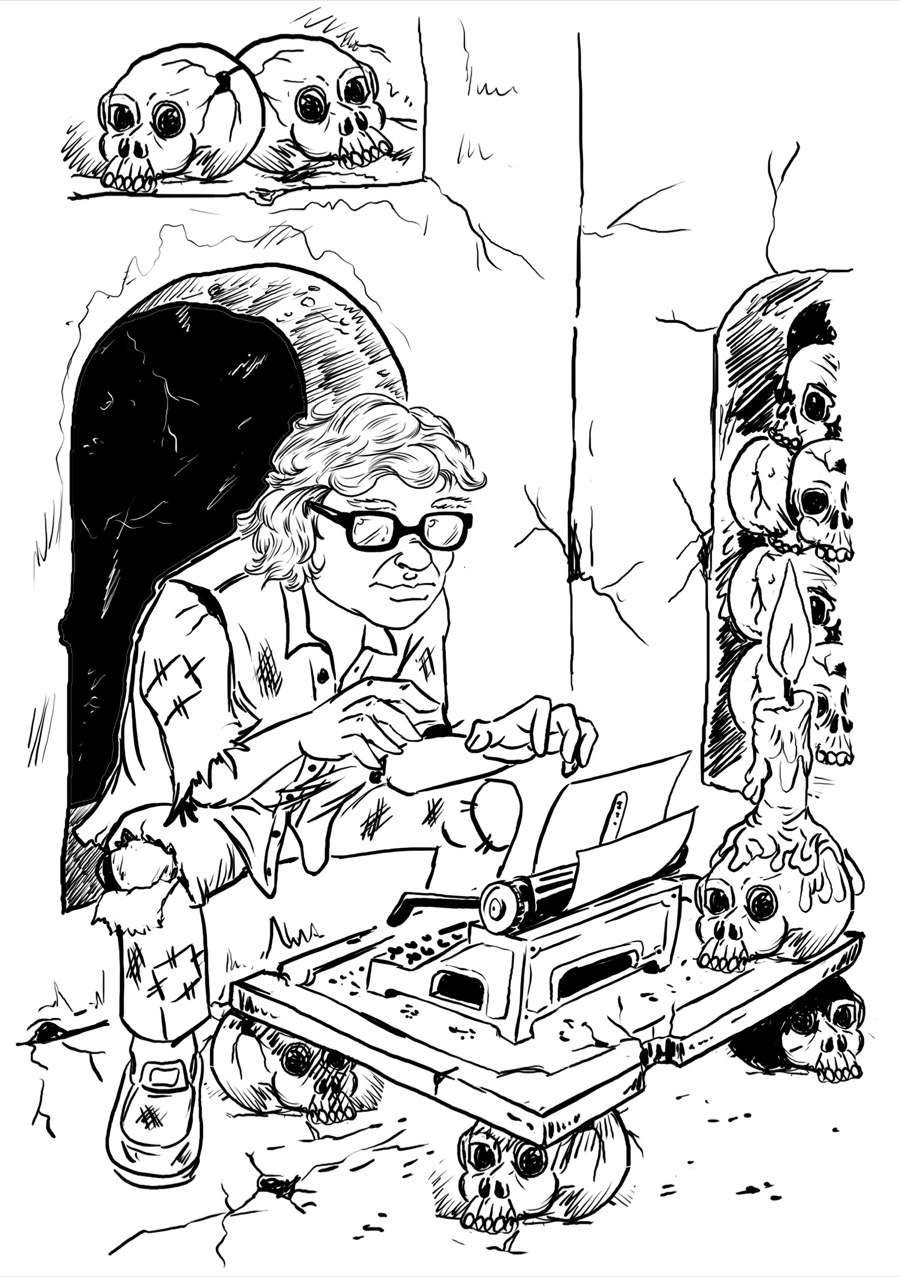
But Branson had learned his lesson well with the founding of Student Magazine. Raising printing costs before going to press minimized risk. Even post-launch, Branson continued to be a master of keeping costs low. For much of its existence, the magazine ran out of a church crypt with his desk nothing more than a marble slab spread across two tombs. The reason for this morbid office suite? The pastor lent him the crypt for free.
With his heart set on starting Virgin Atlantic, Branson entered negotiations with Boeing for the purchase of a second-hand 747. He was an outsider to the airline industry, but if Boeing thought this brash young entrepreneur was going to be a pushover, they were sorely mistaken. As Branson says, “If you are a risk taker, then the art is to protect the downside.” Branson offered to buy the plane on one condition, that he could return it to Boeing at the end of the first year should Virgin Atlantic fail.
Needless to say, Boeing didn’t like this idea. Nordstrom might allow you to return a sweater, but aircraft manufacturers aren’t in the habit of offering refunds. A 747 is an expensive purchase. Boeing wanted the plane off their books and the sale finalized. They didn’t want the risk it might come back in a year’s time.
But Branson had leverage. Aircraft sales were down, and Boeing had a particular interest in seeing a competitor rise against British Airways. In the end, not only did Boeing agree to give Branson his money back should his airline flop, they agreed that if plane prices went up in the interim, they’d refund him more than he paid. Someone at Boeing quipped, “It’s easier to sell a fleet of jumbos to an American airline than just one to Virgin.”
Protecting the downside has indeed been one of Virgin Group’s core philosophies. This, perhaps more than any other factor, has allowed Virgin to expand into so many arenas. Normally businesses stay within a narrow area of expertise, but Virgin’s companies are all over the map. Beyond music, air flight, and cola, they’ve ventured into banking, mobile phones, space tourism, and much more.
It’s important to note not all these businesses have been successful. Virgin Cola enjoyed tremendous early success but ultimately got out-muscled by Coke, which forced enough stores to stop carrying the upstart rival that it went out of business. Yet, none of the failures ever threaten to destroy Virgin Group as a whole because of Branson’s obsession with protecting the downside.
How does Virgin manage downside protection across such a wide range of businesses? Let me present just a few elements in their risk minimization formula.
First, it’s important to understand Virgin is not a single company with a range of products. Rather, the Virgin Group owns and operates a collection of companies. While Virgin Cola was no doubt served onboard Virgin Atlantic flights, each one functioned independently. This business structure greatly limits the downside of a failure. Indeed, Virgin Atlantic, after decades of success, filed for bankruptcy protection after COVID-19 forced it, and virtually every other airline, to massively cut flights. But Virgin Mobile was spared sharing the airline’s fate because the two ventures are not part of the same corporation.
Another key ingredient to minimizing their downside is their preference for partnerships. Rather than owning 100% of a business, Virgin Group prefers to start new businesses in partnership with industry insiders. Virgin brings their extraordinary brand and culture to the deal, their partners bring expertise in the specific business area, and they jointly form a new corporation.
What Branson refers to as protecting your downside, I refer to as Asymmetrical Risk/Reward, a concept Chana and I teach in greater depth in our novel The Size of Your Dreams. The concept is simple, even if the execution isn’t always. Whenever possible, risk little to gain much.
By only printing once he had his costs covered, Branson’s magazine became a low-risk, high-reward venture. By having a money-back guarantee on his first airplane, Branson made his airline, which would normally be a high-risk venture, into a much lower risk one.
As you get ready to launch your next project, stop and ask yourself, “How can I protect my downside?” In other words, how can you minimize the risk so that even if you fail, you’ll lose little, but if you succeed, you’ll still win big? The following steps can help:
- Identify all potential risks. The risk you haven’t considered is a bigger threat than the one’s you’ve already weighed. Make a list of all risks and their likelihood to block your success.
- Attempt to mitigate each risk. For each one, see if there’s a way you can protect the downside, such as how Branson did by raising the money to print Student magazine first.
- Make sure failures can’t cause chain reactions. By making each of his ventures an independent corporation, Branson didn’t jeopardize healthy companies when others failed. So too, you can put legal and financial protections in place to stop one failure from bringing down your entire operation.
- Negotiate away risk. As we saw in Chapter 5, there is huge upside and little downside from asking for what you want, and you can use this technique to remove risk factors. Branson knew he had a huge risk of failing with his airline, and he knew Boeing badly wanted to sell him a 747. So he negotiated that he could return the plane if he failed.
- Follow clear patterns of success. Branson formed partnerships with industry insiders when penetrating new markets. While you don’t necessarily need partnerships, you can model your efforts on those that have already been successful for others.
- Create early warning systems. The sooner you learn of problems, the less likely they are to derail you. This is such an important factor that all of the next chapter is devoted to exploring it in depth.
