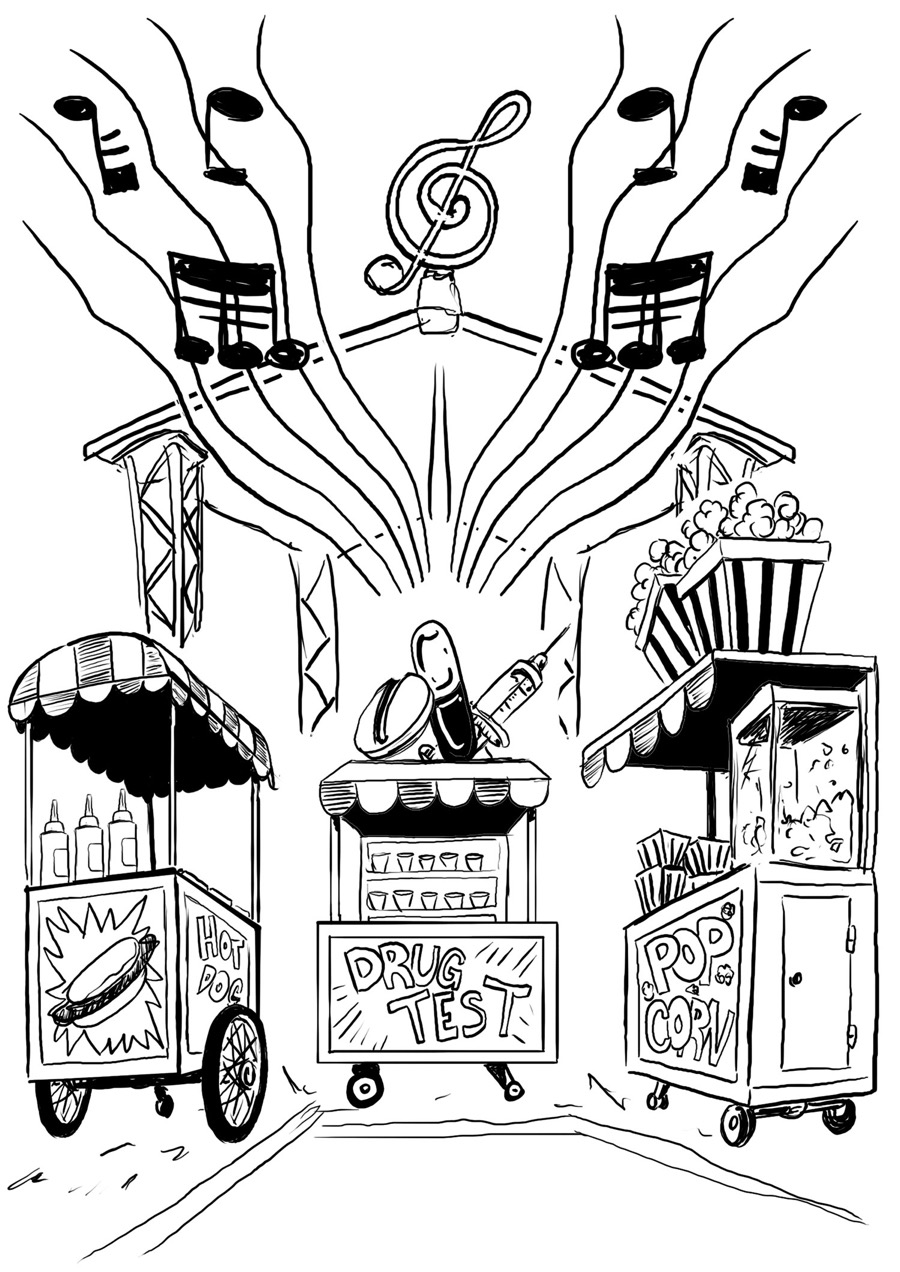
In 2016, Buenos Aires hosted the Time Warp Festival, a techno and house music festival started in Mannheim, Germany during the mid-90’s raving craze. It featured top underground DJs, blaring music, flashing lights, insane dancing, and, of course, plenty of drugs.
But in Buenos Aires in 2016, something went wrong. On the first night, a bad batch of drugs circulated, leaving six participants dead. The rest of the festival was canceled, the event organizers were arrested, the mayor of Buenos Aires banned all future music festivals, and a judge banned “all commercial activity and live and recorded music” in the city.
In neighboring Uruguay, the Time Warp deaths also shook up the locals. With their own electronic music festival, La Terraza, just a few months away, how could they prevent a Time Warp tragedy on their own soil?
They had several options. They could have followed the Buenos Aires model and simply canceled the festival. Alternatively, they could have done extensive security searches of each ticket-holder. Drugs are part of Rave culture, and searches could have ferreted out huge amounts of illegal drugs, leading to dozens of arrests. But searches and arrests would have ruined the festival’s vibe.
Instead, they ran drug tests.
When I think of drug tests, my mind goes first to sports, where random screenings curb the use of performance-enhancing drugs. Employers also do drug testing to assure applicants and staff are sober. But the tests launched in Uruguay for La Terraza were of a different sort entirely. They weren’t performed on individuals to keep them drug-free. Instead, they tested drugs themselves to catch adulterations.
The Uruguay approach was a radical departure from standard drug control measures. Rather than increasing police presence and stepping up arrests, Uruguay accepted drug use as inevitable and tried to make it safer.
During the La Terraza festival, drug testers carried out 135 tests on LSD, ketamine, and cocaine. In five instances, tests revealed potentially dangerous adulterants, including a sample of cocaine found to be laced with the anti-parasitic Levamisole.
A batch of 135 drug tests at a large music festival like La Terraza is only a drop in the bucket. Drug users were wary of bringing their stash into testing tents, and the vast majority skipped the option despite measures to create an atmosphere of trust such as keeping the drug tests anonymous and protecting drug users from legal consequences.
Indeed, such a solution may seem naive. With tens of thousands at a festival, how much impact could 135 drug tests make? For each dose tested, a hundred likely eluded the testers. If the point was to find and remove tainted drugs from the festival, we would have to consider the effort a failure. However, that wasn’t the point of the testing. So what was?
The creation of an early warning system.
The drugs at Time Warp didn’t have a 100% fatality rate. Six died, but others took critically ill. Presumably, many more were exposed to the same batch of drugs without severe consequences, either because they took lower doses or had stronger tolerance for the adulterants.
Imagine the Time Warp festival again, but now with La Terraza style testing tents. The vast majority of drug carriers would walk past the tents without entering, but a small percent would have taken the offer. Given the wide circulation of an adulterated drug and the symptoms experienced by those taking it, odds are that before long, testers would sample a dose with the dangerous adulterant. Since the festival wished to create a safe environment rather than stamp out all drug use, the DJs could have announced the discovery and warned participants.
At this point, many more who purchased that drug would likely proceed to the testing tents to make sure they weren’t at risk. As testers found more adulterated samples, they could have notified hospitals, had emergency medical teams sent to the scene, and perhaps even tracked down the dealer. Further announcements could have warned participants of symptoms to be on the lookout for and encouraged anyone experiencing such symptoms to seek help. If the situation continued to worsen, the festival itself could then be cancelled, but more likely, such precautions would have averted a disaster.
Early warning systems can be critical to minimizing the downside of your failures. Let’s look at a few factors for effectively creating early warning systems:
- Identify potential risks. It’s far easier to create an early warning system around a specific risk, so brainstorm in advance all the risks you want to build warning systems around. In La Terraza, they focused on just one, adulterated drugs, but you may have multiple risks you wish to account for.
- Define Key Risk Indicators (KRIs). Many business talk about KPIs, Key Performance Indicators, but it’s just as important to know which metrics in your business can signal that a risky situation is developing. KRIs can include customer satisfaction scores, downtime frequency, or specific financial ratios. The important thing is that KRIs be actionable, measurable, and directly tied to the risk you hope to mitigate.
- Establish thresholds. For each KRI, determine the threshold that could signal a crisis. In the early days of my ecommerce business, if I hadn’t received a single sale by 9am, I’d take a quick look to make sure the website was functioning. If nothing came in by 10am, I’d do a deeper inspection of the shopping cart. Some days just started slow, so this KRI didn’t always indicate a problem, but it was a dependable rule of thumb for when to increase my vigilance.
- Plan your response. How will you react if the KRI threshold is crossed? Who is responsible for responding? How will that person be notified there’s a potential problem? Is there a clear plan for how to investigate the issue? For escalating the response if a legitimate problem is discovered?
An early warning system can greatly reduce the negative impact of our failures. But as we’ll see in the next chapter, there is one big caveat. You must actually heed the warnings.
