Which of the following would you pay more for?
- A Beta edition of a raw, unfinished product; or
- That same product once all the kinks have been worked out
The obvious answer is the latter. Indeed, the heavy discounts on AppSumo are the main reason Sumolings are willing to buy an app that might still lag behind the market leaders. But wouldn’t it be nice if you could figure out a way to charge a premium for your unfinished product?
Let’s go back to our old friend Russell Brunson and look at the release of his most recent book, Traffic Secrets. Though it contains his secrets for increasing website traffic, the book itself was anything but a secret. For more than a year before its release, Russell hinted, teased, and plugged it every chance he got. Russell’s built an incredibly active community around himself and his company, ClickFunnels, and his plugs created tons of anticipation.
But even as he was building anticipation, he still needed to produce an amazing book. Russell will be the first to tell you writing isn’t his forte. He shines on stage. Whereas I write draft after draft of my books to improve my material, Russell likes to hone his material by teaching it live.
I have a digital copy of the finished, final edition of Traffic Secrets, for which I paid $0.99 on Amazon. So if the final product, with Russel’s thoughts fully organized, is only worth a buck, what do you think it would be worth to watch him deliver the raw, unorganized lessons? A dime perhaps? A quarter at most?
Hardly. Only Russell’s elite inner circle were privileged to hear him teach the early versions live, and they paid thousands of dollars each for the chance.
Obviously, the comparison between an ebook and an in-person event is a silly one. But don’t let that distract you from the key point. We expect discounts for Beta-editions, but will gladly pay more for early access to exclusive content. We’ll pay less for unpolished content but more to participate in the launch of something new even if it doesn’t have all the bugs worked out.
Is the difference just spin?
Samsung makes excellent phones, but no one camps out to get the first crack at a new Samsung. So why will they do so for a new iPhone? It’s not because anyone in line has a pressing need to make a phone call. Or send a text. Or take a photo. Or listen to a song. Virtually everyone waiting for hours outside the Apple store already has a device with nearly identical functionality. Sure, their current phone might have a few cracks in the screen or be running a tad slow, but is their need for a new phone so dire they couldn’t have waited a couple of days to buy it without the line?
Of course not. No one lines up for the new iPhone because of a technological need. They’re there for the same reason I stood in long lines as a kid to see The Empire Strikes Back and Return of the Jedi on the day they were released. I wanted the excitement of being among the first to see the new Star Wars movies, before I heard about them from anyone else. I wanted to be one of the kids at school talking about the movie rather than plugging my ears to avoid spoilers. And did I mind standing in line for movie tickets? Absolutely not. I was there amongst my tribe.
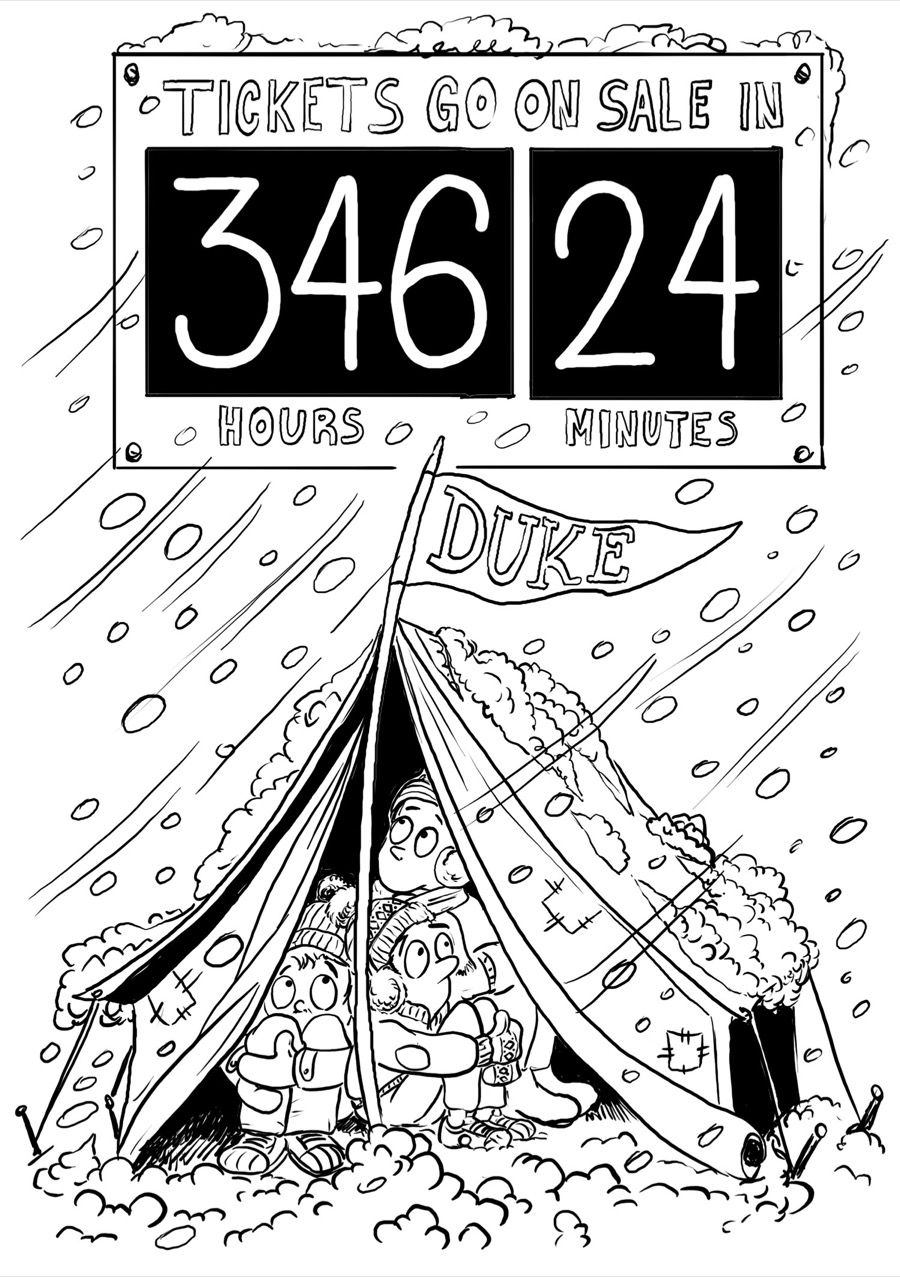
There are incoming freshman at Duke University who look forward to camping out for weeks to get basketball tickets. As much as they enjoy basketball, if you handed them free tickets and told them they didn’t need to wait, many would be disappointed. Camping out for tickets has become part of the culture of the university. For the rest of their lives, Duke alumni tell the stories of how they camped out with other fanatic fans to get the best tickets. The experience itself is part of their identity.
The best brands make customers feel like they’re a part of something. The people who pay Russell Brunson thousands of dollars to hear him stumble through his early, raw presentations on Traffic Secrets weren’t only there to be with Russel or to learn new marketing tactics. They show up for each other as well. They’re there because Brunson’s succeeded in one of the hardest and most powerful areas of brand building. He’s created a community. And not just a community, a culture. In fact, Russel calls it a “Cult-ure” because of the fanatical, cult-like energy of his followers. ClickFunnels groupies literally go on cruises together. Cruises! Around digital marketing of all things.
This third way of minimizing the downside of your failures is by far the hardest to execute. Anyone can offer a money-back guarantee. Anyone can offer surprise bonuses. Both of those categories focus on your offerings. This third area is all about you.
Simply put, those who identify with you and want you to succeed will be far more forgiving of your failures. They’ll be excited about your journey and want to come along for the ride, even when there are bumps in the road.
Think about any brand or movement you’ve ever fallen in love with. Chances are, it wasn’t just because of a great product, but because of a powerful vision you desired to connect with. And most likely an individual who represented that vision.
Again, Samsung makes a great phone. But I haven’t the slightest idea who built the company or what distinguishes them. Apple’s cult-like following didn’t just happen. Steve Jobs built it. His ads didn’t focus on processing speed, but to “Think Different.” Steve told us the power of individual expression we’d unlock with a Mac would stop the year 1984 from being like the book 1984.
How many car commercials have you seen touting horsepower, bucket seats, cup holders and the like? My son is obsessed with Tesla, and I assure you he couldn’t care less about the cup holders. He loves the company because Elon Musk has a vision that goes beyond selling cars. Musk speaks about global challenges and how to build a sustainable future through technology. Tesla has suffered through one high-profile mistake after another, but fans shrug them off. It doesn’t even matter if Nissan releases a new version of the all electric Leaf that’s cheaper than the comparable Tesla. When you’re a fan, you’re not price shopping because your buying choices are part of your identity.
So how does one build a base of raving fans so excited to journey with you they’ll forgive mistakes along the way? Let’s briefly look at three aspects: person, message, and community.
- Person
When presenting ourselves to others, especially to would-be clients, we have an innate desire to cover up our flaws, to make ourselves sound better than we are. Here’s a warning: if you present yourself as infallible, don’t expect others to forgive your blunders.Contrary to popular belief, you don’t have to be incredibly charismatic to get people to care about you and your mission. If you are real, present, and vulnerable with your audience, they’ll be real, present, and forgiving in return. The more you open up to your audience, the more they’ll open up to you. - Mission
What is it your business stands for? If it’s simply that you offer a good product at a good price, then don’t be surprised if your customers jump ship when a competitor offers a better product or price. But if you have a true mission you share with your audience, those who believe in the mission won’t go running to a competitor with slightly higher specs or a slightly lower price tag. - Community
Founders can be tyrants when it comes to their brand, product, or project. The need to maintain control is so common its even got its own name: founder’s syndrome. But to build fierce loyalty, it’s important to create the space for others to step up. At a certain point during Dream, Design, Manifest, a couple of participants started a Mastermind group, and they recruited other students in the class to join them. Part of me wanted to protest and say, “Hey, this is our show. What are you doing stepping up and taking the lead?” Fortunately, the wiser part bit my tongue and let it happen. No one was stepping on our toes. Rather, they were saying the work we’d done together was important enough that they wanted to continue integrating it together even after the class came to an end.
Those Duke freshmen who camp out for weeks aren’t just there for basketball tickets, they’re there to be with each other. Standing in line for the new iPhone with other Apple fans or waiting for Return of the Jedi tickets with other Star Wars fans adds to the excitement of the event. When your brand reaches beyond you, beyond your products or services, and others find a community of peers under your banner, when it becomes part of their identity, they’ll graciously tolerate a few bumps in the road.
